
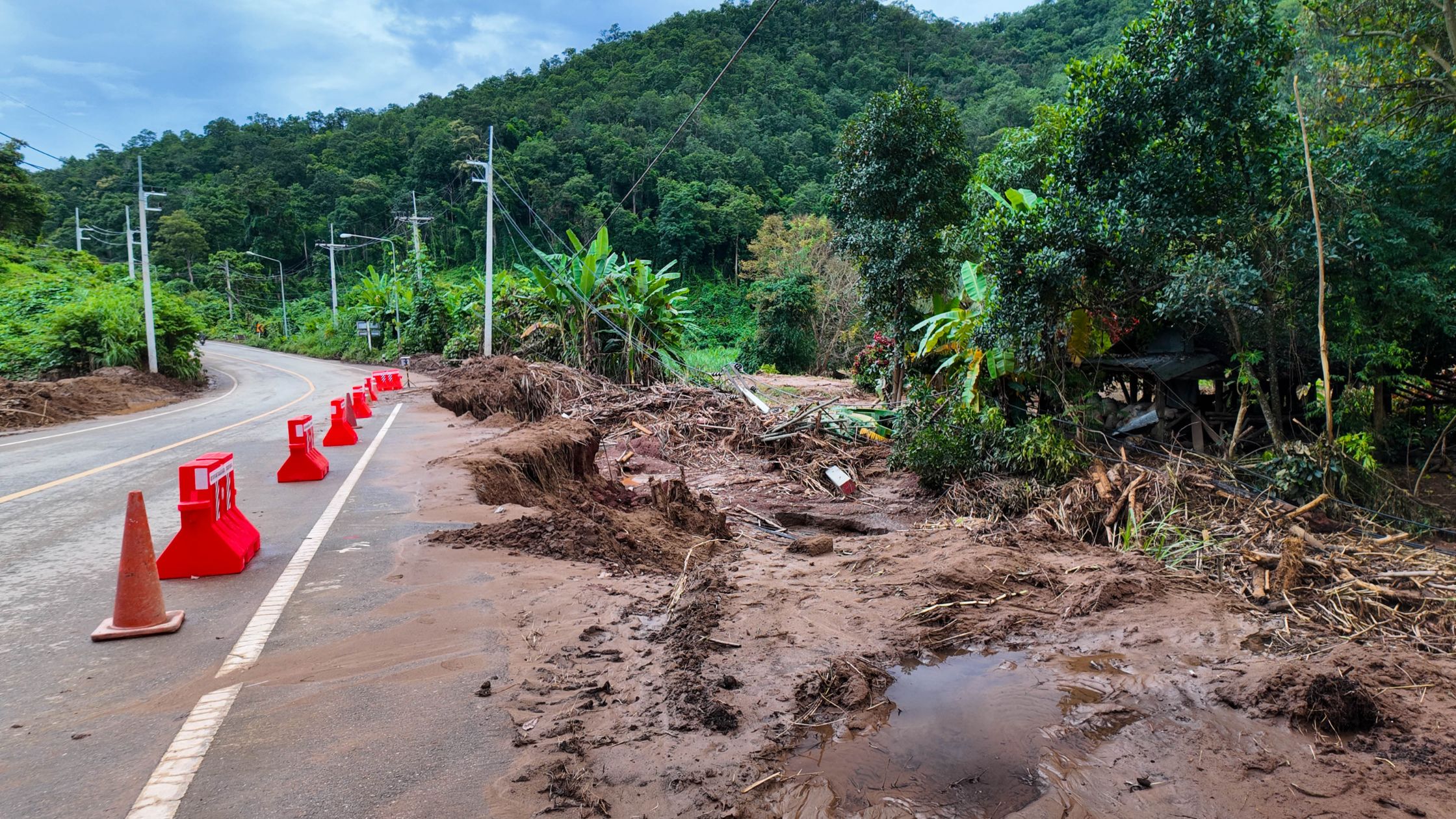
Gloucester County and the broader Virginia Peninsula sit squarely in the path of Atlantic storm systems, tropical depressions, and nor’easters that can dump several inches of rain in just a few hours. When that happens, driveways wash out, slopes erode, drainage systems fail, and pond banks collapse, often overnight. Emergency site repair in Virginia is not just about fixing what looks broken. It is about stopping active damage before a manageable problem turns into a months-long restoration project.
This article walks you through exactly what to do in the first 24 hours after a storm event, what to watch for, and when to call a licensed contractor before conditions get worse.
Key takeaways
- Storm damage to your site does not pause between rainfall events, so quick action matters
- Erosion that begins on a slope or shoreline can undermine foundations, utilities, and drainage infrastructure within days
- Virginia’s clay-heavy soils and flat coastal terrain make post-storm saturation a serious compounding risk
- Documenting damage thoroughly before any work begins protects you with your insurance provider
- Emergency site repair in Virginia requires coordination with state regulations, including Virginia DEQ guidelines for any work near wetlands or waterways
- Hiring a licensed Class A Contractor gives you access to proper equipment and experienced crews who can mobilize quickly
Overview
This guide covers the full scope of emergency response for property owners dealing with storm damage across Central and Eastern Virginia. You will learn how to assess your site safely, understand what types of damage require immediate professional intervention, and get a realistic picture of costs and timelines. Whether you are dealing with a washed-out driveway in New Kent County or an eroding pond bank in James City County, the steps in this guide apply directly to your situation.
ML Blake Earthworks has served property owners across the Virginia Peninsula and Middle Peninsula for years, handling everything from emergency erosion repair to full site restoration. This article reflects the real-world knowledge our crews bring to every storm response job.
Why the first 24 hours after a storm are so critical
Virginia’s humid subtropical climate means the ground is often already saturated before a major storm arrives. When heavy rain hits clay-heavy soils, water cannot absorb fast enough. It sheets across the surface, cuts channels into slopes, and pools in low areas where it continues to eat away at soil structure. Every hour of inaction after a significant rain event increases the volume of material displaced.
On properties near tidal creeks, the York River, or the Piankatank River, this problem compounds quickly. Storm surge and elevated water levels push against shorelines already weakened by wave action, and what starts as minor surface erosion can expose root systems, undercut retaining structures, or breach pond levees within a single tidal cycle.
The key risk is not the damage you can see. It is the underground undermining that happens when saturated soil begins to shift beneath driveways, foundations, and drainage pipes. By the time visible cracking or settling appears, the subsurface problem has often been building for days.
Step one: assess your site safely
Before you call anyone or touch anything, walk your property carefully and document what you see. Take photographs and videos from multiple angles. Note the time of day and how many hours have passed since the heaviest rainfall.
Look for these specific signs of storm damage:
- Rilling or gullying on slopes, lawns, or along driveways (small channels cut by flowing water)
- Slumping or cracking soil near pond banks, embankments, or slope transitions
- Standing water in unusual locations, particularly near the base of structures or utility corridors
- Exposed tree roots or undermined vegetation along shorelines or steep grades
- Shifted riprap, broken bulkhead sections, or displaced stone along waterfront areas
- Sinkholes or soft spots in driveways or turf areas that may indicate pipe failure underneath
Do not walk on saturated slopes, approach undercut banks, or attempt to cross standing water in low areas. Wet clay soils can give way without warning. Your documentation is useful, but your safety comes first.
Step two: stop active erosion before the next rain
Once you have documented the damage, your next priority is to slow or stop active erosion before the next rainfall event, which in Virginia’s storm season can arrive within 24 to 48 hours. This is where professional contractors add immediate, measurable value.
A licensed crew can deploy several fast-response measures depending on your site conditions:
Silt fencing and erosion control fabric can be installed quickly along active erosion channels to slow sediment movement. This is not a permanent fix, but it limits how far damage spreads before full repairs begin.
Temporary diversion berms or sandbag channels redirect surface water away from vulnerable areas such as pond banks or freshly disturbed slopes. In flat terrain, even minor grade adjustments can keep water from pooling in the wrong location.
Mulch blanketing or hydraulic seeding provides temporary soil stabilization on slopes, particularly where vegetation has been stripped by heavy runoff. These methods work fast and begin protecting exposed soil within days.
If your shoreline has been damaged, do not attempt any repair work near Virginia waterways without first checking whether permits are required. The Virginia Department of Environmental Quality and the Virginia Marine Resources Commission regulate work along tidal shorelines, and emergency work near wetlands often still requires at minimum a notification to the appropriate agency.
Understanding emergency erosion repair after storm events in Virginia
Emergency erosion repair after storm Virginia demands a different approach than scheduled site work, and property owners who treat it like a routine project almost always underestimate how quickly conditions can change. Ground that is fully saturated may not support heavy machinery safely, meaning some repairs must be staged in phases as the site dries.
That said, experienced contractors know how to sequence repairs intelligently. Temporary stabilization comes first. Structural repairs to pond banks, shorelines, or drainage infrastructure follow once the site is safe to work. Final grading, seeding, and permanent erosion control measures complete the process.
Typical cost ranges for emergency site repair in Virginia vary significantly based on scale and urgency:
- Minor slope erosion repair and temporary stabilization: $1,500 to $4,500
- Driveway washout repair with proper base reconstruction: $3,000 to $8,000
- Pond bank repair with reseeding and armoring: $5,000 to $15,000 or more depending on the length and severity
- Shoreline emergency stabilization (riprap or geotextile deployment): $8,000 to $25,000 depending on linear footage and site access
These are general ranges. A site visit is always necessary before any accurate estimate can be given. Emergency mobilization may carry a premium compared to scheduled work, but it is consistently less expensive than waiting for damage to spread.
When to call a professional immediately versus waiting
Not every storm leaves behind an emergency. A few ruts in a gravel driveway or minor sheet erosion on a lawn can often wait for scheduled repairs. But certain site conditions demand immediate professional response.
The need for emergency erosion repair after storm Virginia events becomes clear when you understand how rapidly saturated clay soils lose structural integrity once surface water finds a channel. What looks like a surface scratch in the morning can become a foot-deep gully by the following afternoon.
Call a contractor within the first 24 hours if you observe any of the following:
- Active erosion reaching a pond bank, structural foundation, or utility corridor
- A slope failure or visible slump in an embankment
- Shoreline damage along a tidal waterway, especially if riprap or a bulkhead has shifted
- Drainage pipe failure causing pooling near structures
- A washed-out driveway that blocks site access for emergency vehicles or farm equipment
For property owners in areas like Kilmarnock or along the Lancaster County waterfront, shoreline damage in particular warrants fast action. The combination of tidal influence and storm surge means shoreline erosion does not stabilize on its own. Every additional tidal cycle without protection removes more material.
Hiring a contractor with a Virginia Class A Contractor license also matters for insurance purposes. Most homeowners’ and property insurance policies require that emergency repairs be performed by licensed contractors to qualify for reimbursement. Keep all invoices, photos, and repair records from the first response through final restoration.
Professional repair versus waiting it out
Some property owners hesitate to call a contractor during or immediately after a storm because they want to see if the damage stabilizes on its own. In Virginia’s climate, this is rarely the right call.
The region’s wet seasons, combined with clay soils that retain moisture for extended periods, mean that surface damage almost always worsens without intervention. A small erosion channel that forms during a storm will carry more sediment during every subsequent rain event. A shifted riprap stone creates a void that the next wave action widens.
The cost difference between early intervention and delayed repair is not marginal. Property owners who address storm damage within the first week typically spend 40 to 60 percent less than those who wait a month or more for conditions to stabilize on their own. The equipment, labor, and material costs rise sharply when more material has been lost and more infrastructure has been compromised.
Professional contractors also carry liability insurance and are familiar with Virginia shoreline restoration requirements for work near wetlands and tidal areas, protecting you from regulatory penalties that can add significant cost to an already expensive repair.
What the repair process looks like from start to finish
Understanding the full repair process helps property owners set realistic expectations for timeline and cost. Here is how a typical emergency site repair in Virginia moves from initial response to completed restoration.
Phase one: emergency stabilization (hours 1 through 48). The crew installs temporary erosion control, diverts surface water away from active damage zones, and secures any structural components at immediate risk. No permanent repairs happen in this phase.
Phase two: site assessment and permitting (days 2 through 7). The contractor evaluates subsurface conditions, identifies the full scope of repair needed, and determines whether any state or local permits apply. For work near Virginia waterways, this step cannot be skipped.
Phase three: structural repair (days 7 through 30 depending on scale). This is where professional sitework services and permanent erosion control measures are installed. Pond banks are degraded and armored, drainage systems are repaired or upgraded, and shoreline protection structures are rebuilt to current standards.
Phase four: final stabilization and seeding (30 to 60 days post-storm). Permanent vegetation is established, final grading is completed, and any remaining erosion control fabric or silt fencing is removed once vegetation coverage reaches the threshold required by permit conditions.
Local insight: how Virginia’s terrain affects storm recovery
Central and Eastern Virginia presents specific challenges that contractors from outside the region often underestimate. The flat to gently rolling coastal plain means there is nowhere for surface water to go quickly. It collects, pools, and saturates large areas before finally draining through tidal tributaries or engineered stormwater systems.
Clay soils retain moisture for weeks after a major storm. This makes equipment access difficult and increases the risk of additional slippage during repair work. Experienced local contractors know to schedule heavy equipment work during drier windows, use tracked machinery that distributes weight more evenly, and avoid overloading saturated banks or slopes.
Williamsburg and James City County property owners often deal with storm drainage that backs up into low-lying wooded areas, creating standing water that persists for days. In these situations, professional land clearing services that open drainage corridors may be part of the storm recovery process, not just the initial repair.
For pond owners across the region, storm events can destabilize levees and pond banks that looked perfectly sound before the rain arrived. Professional pond construction and repair requires understanding how water table levels, storm inflow volumes, and soil saturation interact, knowledge that comes from working in this specific landscape over many seasons.
Costs, insurance, and documentation
Virginia property owners dealing with storm damage should contact their insurance carrier within the first 24 hours alongside calling a contractor. Most policies cover sudden and accidental damage caused by storm events, but the documentation standard matters.
Photograph damage before any work begins. Record the date and time. Save all written estimates, invoices, and completion records. If a contractor installs temporary erosion control before a formal estimate is written, ask for a written record of that work as well.
Many insurers will ask for a licensed contractor’s assessment as part of the claims process. A Class A licensed contractor like ML Blake Earthworks can provide the documentation format most insurers require, which reduces friction during the claims process and protects the property owner from disputes over whether work was necessary.
Ready to get your site stabilized after storm damage?
When storm damage threatens your property, fast and qualified help makes all the difference. ML Blake Earthworks, located at 5181 Fletcher Rd, Gloucester, VA 23061, serves property owners across Central and Eastern Virginia with emergency site repair, erosion control, shoreline restoration, and full site recovery services. Call (804) 854-2176 to speak directly with an experienced crew about your situation. Our team is familiar with Virginia’s terrain, soil conditions, and regulatory requirements, and we can mobilize quickly to protect your property before the next rain event arrives. Visit https://mlbearthworks.com/ to learn more about our services and service area.
Frequently asked questions about emergency site repair Virginia
Q: How quickly can a contractor respond to storm damage in Virginia?
A: Response times vary, but licensed contractors experienced in emergency work can typically reach a site within 24 to 48 hours of initial contact. Temporary stabilization measures can often be deployed the same day, which is the most important thing to accomplish before the next rainfall event.
Q: Does storm erosion repair require permits in Virginia?
A: It depends on the location of the damage. Work near tidal waterways, wetlands, or navigable waters typically requires permits or at minimum notification to Virginia DEQ or the Virginia Marine Resources Commission. A licensed contractor will identify permit requirements before any repair work begins.
Q: What is the biggest mistake property owners make after a storm?
A: Waiting too long before calling a contractor. Many property owners assume the damage will stabilize on its own. In Virginia’s high-rainfall, clay-soil environment, erosion almost always continues and worsens between storm events, significantly increasing the final repair cost.
Q: Will my homeowner’s insurance cover emergency site repair costs?
A: Many standard homeowner’s policies cover sudden storm-caused damage to structures and driveways but have limitations on land erosion. Document everything immediately, contact your insurer within 24 hours, and use a licensed contractor to ensure the work qualifies under your policy terms.
Q: How do I know if my pond bank is at risk after a heavy rain?
A: Look for slumping soil near the water’s edge, cracking in the bank surface, sections where vegetation has pulled away from the slope, or visible undercutting at the waterline. Any of these signs indicate active instability that should be evaluated by a contractor before the next storm arrives.
Q: Is emergency shoreline repair different from scheduled shoreline work?
A: The end result is similar, but emergency work involves rapid deployment of temporary protection first, followed by assessment and permanent repair in phases. Properties along the York River or tidal creeks face ongoing tidal action, so speed matters more than it does for inland sites.
Q: How long does a full site repair take after a major storm in Virginia?
A: Emergency stabilization can happen within 48 hours. Full repair, including structural work, drainage upgrades, and final seeding, typically takes three to six weeks depending on site access, soil conditions, permit requirements, and the scale of damage.
Q: What should I ask a contractor before hiring them for storm damage repairs?
A: Ask whether they hold a Virginia Class A Contractor license, whether they have experience with Virginia DEQ permit requirements, what their emergency response timeline looks like, and whether they can provide a written estimate that documents the scope of damage for insurance purposes.
Conclusion
Storm damage in Central and Eastern Virginia moves fast. The region’s soils, terrain, and storm frequency create conditions where damage that looks manageable on the morning after a storm can double in scope within a week. Emergency site repair in Virginia is not a project to approach cautiously or delay. The property owners who come out ahead are the ones who document immediately, stop active erosion early, and bring in a licensed contractor before conditions on the ground get worse.
Working with experienced local professionals means you get crews who understand Virginia’s clay soils, regulatory environment, and seasonal weather patterns. That local knowledge shapes every decision from equipment selection to repair sequencing. Do not leave storm recovery to chance. Act in the first 24 hours, and give your property the best chance for a complete and lasting restoration.