
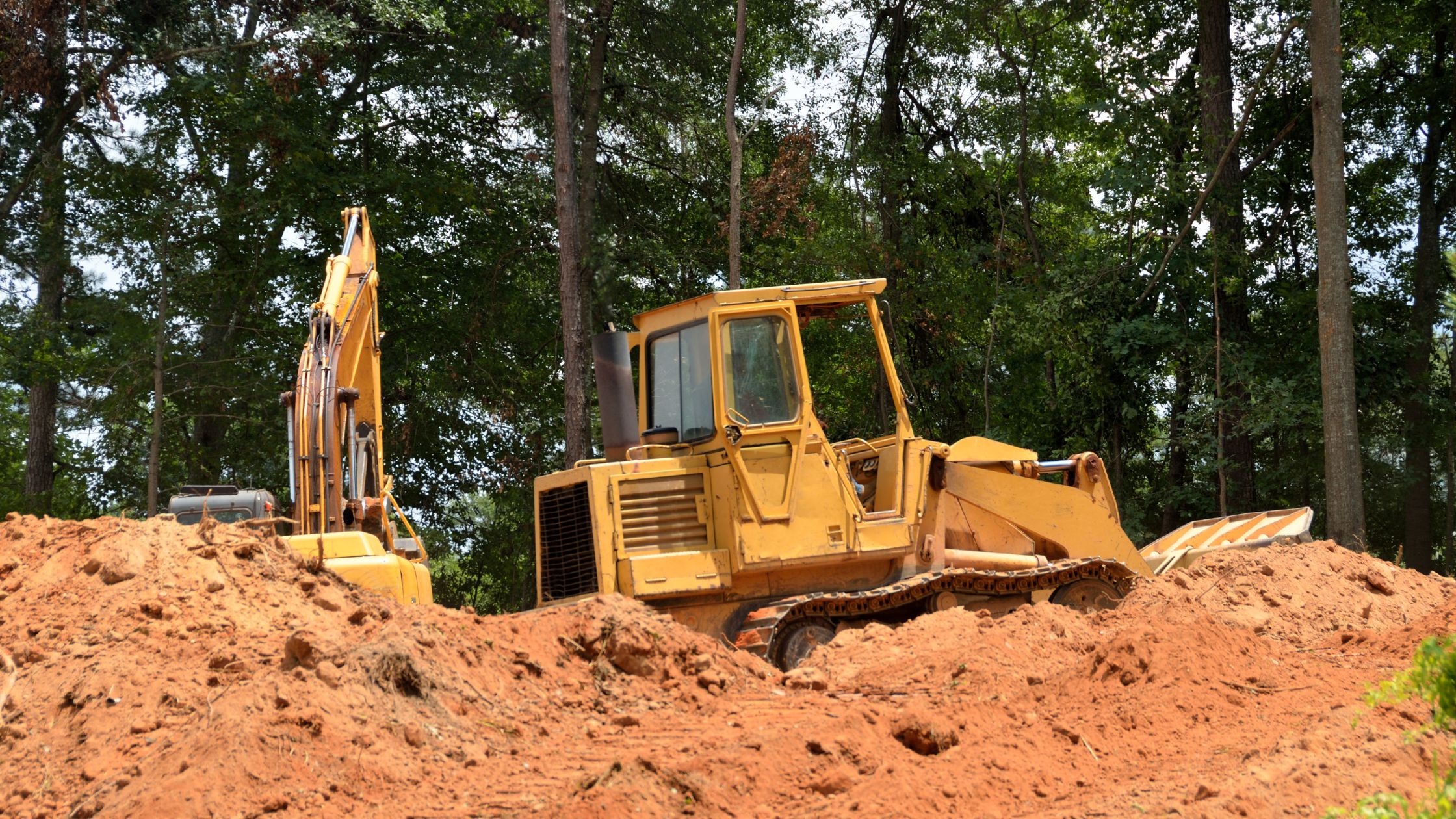
Gloucester County sits where the York River, Piankatank River, and dozens of tidal creeks carve through some of the most scenic and most regulated land on Virginia’s Middle Peninsula. If you own a wooded lot here or a parcel just back from the water, you already know the land doesn’t give itself up easily. Tree roots run deep, the soil shifts between heavy clay and sandy loam depending on where you are, and the buffer zones around tidal wetlands add a layer of complexity that surprises even experienced property developers.
This article walks you through what land clearing in Gloucester, VA actually involves: the soil conditions you’ll face, the permit considerations that apply to waterfront and near-waterfront properties, realistic cost expectations, and why working with a licensed local contractor makes a real difference on the Peninsula.
Key takeaways
- Gloucester County’s waterfront lots often fall within Virginia DEQ and Army Corps of Engineers jurisdiction, which affects what clearing work is allowed and where.
- Heavy clay soils common to the region hold water after heavy rains, making proper grading and drainage planning essential alongside any clearing project.
- Clearing costs in Gloucester typically range from $1,500 to $6,500 per acre depending on tree density, terrain, and proximity to wetlands.
- Forestry mulching is often the preferred clearing method near shorelines because it minimizes soil disturbance and reduces erosion risk.
- Timing your project for late summer or early fall helps avoid the wettest ground conditions and the peak of tropical storm season.
- A licensed Class A contractor familiar with local conditions will save you money and headaches compared to attempting this work without professional guidance
What this guide covers
Every clearing project in this county comes with its own set of site conditions and regulatory considerations, shaped by the area’s mix of rural agricultural land, wooded residential parcels, and sensitive waterfront property. This guide covers the terrain and soil realities you’ll encounter, the permit landscape for waterfront lots, method options, cost ranges, and the risks of cutting corners. ML Blake Earthworks has worked across Gloucester and the surrounding Peninsula for years, and the information here reflects what actually happens on the ground in this region.
Understanding Gloucester County’s terrain and soil conditions
Gloucester County sits on the coastal plain, which means the land is relatively flat with gentle slopes toward the water. That flatness is both a convenience and a challenge. On the surface, it looks manageable. Below the surface, you often find dense clay that doesn’t drain well after rain events.
Clay soil in this region can hold standing water for days after a heavy storm, especially during the wet season from late fall through early spring. When you’re clearing land and exposing bare soil, that drainage problem gets worse before it gets better. Without proper grading and erosion control measures built into the project from the start, a cleared lot can turn into a muddy liability.
Sandy loam shows up more frequently closer to the waterfront and along creek-adjacent parcels. It drains faster but erodes more easily, which creates its own set of problems near tidal areas. Understanding which soil type dominates your parcel, and in many cases, you’ll find a mix of both, shapes every decision from equipment selection to post-clearing stabilization.
Forestry mulching handles both soil types well because it leaves a layer of mulched material on the ground that suppresses erosion while the site stabilizes. For more traditional clearing with grubbing and grading, your contractor needs to account for drainage from the first pass. Our land clearing services are designed with these local soil realities built into the process.
Waterfront lots and the permit reality
Here is where Gloucester’s waterfront character adds a step that inland clearing projects don’t always require. Virginia DEQ administers the Chesapeake Bay Preservation Act, which creates Resource Protection Areas (RPAs) around tidal wetlands, shorelines, and their adjacent buffers. In most cases, that means a 100-foot buffer where land disturbance, including clearing, is restricted or requires specific approvals.
If your lot touches a tidal creek, borders the York River, or sits near any of the county’s many wetland areas, you need to know whether your planned clearing work falls inside an RPA before equipment shows up. Clearing inside a buffer zone without the right permits can result in stop-work orders, restoration requirements, and fines from the Virginia DEQ.
Preparing a waterfront lot for land clearing in Gloucester, VA, for development typically involves a site assessment to map the RPA boundary, a determination of what activity is allowable, and in some cases, coordination with the Virginia Marine Resources Commission (VMRC) if work approaches the mean low water line. Getting that sequence right upfront prevents costly surprises mid-project.
This is not a reason to avoid clearing your waterfront property. It is a reason to work with a contractor who understands the local regulatory framework and can help you plan the project to stay compliant. The shoreline restoration work we do in this region overlaps heavily with these permit considerations, so we bring that regulatory familiarity to clearing projects too.
Clearing methods suited to Gloucester’s landscape
Forestry mulching
Forestry mulching uses a single machine to grind trees, brush, and stumps into mulch in place. It is particularly well-suited to Gloucester’s waterfront parcels because it keeps heavy equipment passes to a minimum, reduces soil compaction, and leaves a mulch blanket that protects against erosion. If your property sits near a wetland buffer, this method often causes the least disturbance to adjacent vegetation and soil.
Traditional clearing and grubbing
For larger lots being prepared for construction, a full clearing and grubbing approach removes trees, stumps, and root systems entirely and prepares the ground for grading. This method works well on parcels set back from the water where ground disturbance can be managed with proper erosion controls. It pairs naturally with sitework and grading services when you’re preparing land for a home, outbuilding, or paved surface.
Bush hogging and selective clearing
Overgrown fields, brushy fence lines, and lightly wooded parcels throughout Gloucester and King William County benefit from bush hogging when full tree removal isn’t needed. Selective clearing lets you preserve mature trees for shade, aesthetics, or windbreaks while opening up the usable portions of the lot.
What clearing work costs in this region
Cost ranges for this type of work in Gloucester generally fall between $1,500 and $6,500 per acre, with the wide spread reflecting real differences in site conditions. A lightly wooded lot with no wetland considerations sits on the lower end, while a densely forested waterfront parcel with permit coordination and erosion control work lands on the higher end.
Key cost factors include:
- Tree density and species: Hardwoods like oak and hickory take more time and equipment wear than pine or mixed scrub.
- Stump removal: Grinding or full stump removal adds cost but is necessary if you’re building or paving.
- Debris disposal vs. mulching: Mulching in place cuts hauling costs significantly. If debris removal is required, expect additional fees.
- Proximity to wetlands: Near-buffer work may require hand clearing in some zones, which is more labor-intensive.
- Acreage and access: Tight access points or irregularly shaped parcels affect equipment time.
Getting an on-site estimate is the only accurate way to price a project in this region. Site-specific factors matter far more than any general formula.
Professional clearing vs. doing it yourself
Some property owners in the Gloucester area attempt clearing with rented equipment or by hiring an unlicensed operator to cut costs. The risks are real and often more expensive than the savings.
Tractor and skid steer rentals can handle light brush, but they are not designed for the root systems of mature hardwoods. Hitting a buried stump or a large root mass with the wrong equipment can damage machinery and leave the operator liable for the rental cost. On waterfront lots, disturbing soil near a tidal buffer without proper erosion controls can trigger DEQ enforcement.
An unlicensed operator may not carry adequate liability insurance, leaving you responsible if equipment damages neighboring property or utility lines. Virginia’s Class A contractor licensing exists to protect property owners from exactly these situations.
ML Blake Earthworks holds a Class A Contractor license and carries the appropriate insurance coverage for work throughout Gloucester and across the Peninsula. That licensing is not a formality. It reflects real accountability on every project.
Timing your project in Gloucester
Virginia’s humid subtropical climate shapes the best windows for this type of work. Late summer through early fall, typically August through October, offers the most reliable combination of drier ground conditions and stable weather before the rainy season fully sets in.
Spring clearing is possible but comes with softer ground from winter moisture, and heavy equipment can create significant ruts in clay-heavy soils if conditions aren’t right. Clearing during peak tropical storm season, June through mid-October, introduces the risk of a significant rain event hitting freshly disturbed soil before stabilization measures are in place.
If you’re planning a spring or early summer project, working with your contractor on a phased clearing and erosion control plan helps manage that timing risk. Stabilization seeding or mulching can follow clearing quickly enough to limit exposure on most Peninsula properties. If you’re also thinking ahead to pond construction or other site improvements, your clearing contractor can help sequence that work efficiently.
Ready to move forward with your Gloucester property?
ML Blake Earthworks, located in Gloucester, VA 23061, works with property owners across Gloucester County and the surrounding Peninsula on every type of clearing project, from wooded residential lots to waterfront acreage requiring careful permit coordination. If you’re ready to start land clearing in Gloucester, VA or want a professional assessment of your site before committing to a plan, call the team directly at (804) 854-2176. You can also learn more and request an estimate at https://mlbearthworks.com/.
Frequently asked questions about land clearing Gloucester VA
Q: Do I need a permit to clear land in Gloucester County, VA?
A: It depends on your property’s location. Lots within 100 feet of a tidal wetland or shoreline fall under the Chesapeake Bay Preservation Act’s Resource Protection Area rules, which restrict or regulate clearing. Properties farther from the water may not require a specific clearing permit, but confirm with Gloucester County’s planning department before starting work.
Q: How do I know if my lot has wetlands that affect clearing?
A: A site visit from a qualified contractor or environmental consultant is the most reliable way to identify wetland boundaries. Tidal creeks and low-lying areas throughout Gloucester County can contain jurisdictional wetlands that aren’t obvious from a map or a casual walk of the property.
Q: What is forestry mulching and is it right for my waterfront lot?
A: Forestry mulching grinds trees and brush into mulch on-site using a single machine. It is often a good fit for waterfront lots in Gloucester because it limits soil disturbance, reduces erosion risk near buffer zones, and avoids the need to haul debris off-site. A contractor can assess whether your specific site conditions make it the right choice.
Q: How long does clearing take on a typical Gloucester County lot?
A: A standard residential lot of one to two acres typically takes one to three days depending on tree density and site access. Larger or more complex waterfront properties, especially those requiring permit coordination or phased work near buffers, take longer. Your contractor can give a realistic timeline after an on-site visit.
Q: Can clearing be done near the York River or Piankatank River?
A: Yes, but work near these waterways is subject to Virginia DEQ and potentially VMRC jurisdiction. Clearing within the Resource Protection Area buffer requires careful planning and may need specific approvals. A licensed contractor familiar with local regulations can help you understand what’s possible and keep the project on track.
Q: What happens to the trees and debris after clearing?
A: Depending on the method, debris can be chipped and mulched in place, piled and burned with the proper permits, or hauled off-site. Forestry mulching eliminates the debris issue entirely. For larger hardwoods with timber value, some contractors can arrange for log removal, though this varies by species and market conditions.
Q: How do Gloucester’s clay soils affect a clearing project?
A: Clay soils hold moisture and compact easily under heavy equipment, especially in the wetter months. This can create rutting and drainage problems on a cleared lot. A contractor who understands local soil conditions will time work around drier periods where possible and factor erosion control and grading into the overall plan.
Conclusion
Clearing property in Gloucester County involves more than just cutting trees. The area’s waterfront character, clay-heavy soils, and regulatory environment around tidal buffers all shape how a project should be planned and executed. Getting these factors right from the start protects your investment and keeps your project moving without costly setbacks. Working with a licensed, locally experienced contractor gives you access to the site knowledge and regulatory awareness that this region requires.
When you’re ready to move forward, the right team makes the difference between a project that stalls and one that gets done right.