
ML BLAKE EARTHWORKS
Class A Contractor
ML Blake Earthworks is the Class A licensed excavation contractor Hampton residents and businesses trust for site prep that holds up. Hampton sits low on the Chesapeake Bay, with sandy coastal soil, a high water table, and tighter, more developed lots than you’ll find further inland. That combination means excavation here has less room for error, especially when it comes to drainage.
We’ve handled excavation projects across the Hampton Roads area for over a decade, from residential foundation digs to commercial site prep. We know how to grade a compact urban lot without pushing water onto a neighbor’s property, and how to keep a coastal water table from turning your project into a mess.
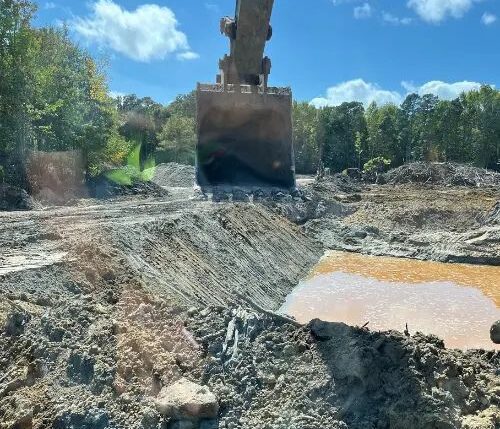
Hampton is one of the more built-up areas we serve, which changes how excavation has to be done compared to a rural Gloucester or King William lot. Space is tighter, neighboring structures are closer, and the city’s stormwater rules are stricter because so much of the surrounding land is already developed.
Sandy, coastal soil. Much of Hampton sits on sandy, well-draining soil close to sea level. That’s good news for drainage in some cases, but it also means a higher water table and a greater risk of erosion during excavation if the site isn’t graded correctly.
Tight lot lines. Hampton’s residential and commercial lots tend to be smaller and closer together than in the more rural parts of our service area. That calls for precise equipment work and a plan for where excavated material and runoff go, so you’re not creating a problem for the property next door.
City stormwater requirements. Because Hampton is largely built out, the city places a strong emphasis on stormwater management for any new excavation or land disturbance, to keep runoff from overwhelming existing drainage systems.
Flood zone considerations. Parts of Hampton fall within FEMA-designated flood zones. If your property is in one, that affects grading elevations and drainage design from day one.


1
We evaluate lot size, access constraints, soil composition, and flood zone status before planning the excavation.

2
We confirm what Hampton’s land disturbance and stormwater permitting requires for your specific project before any equipment moves.

3
We cut and grade the site with precision, accounting for tight lot lines and neighboring structures.

4
4
4
We design grading and drainage together, so runoff is managed on-site and stormwater compliance is built in, not an afterthought.

5
The site is left compacted, graded, and ready for your next phase, whether that’s foundation work, paving, or landscaping.
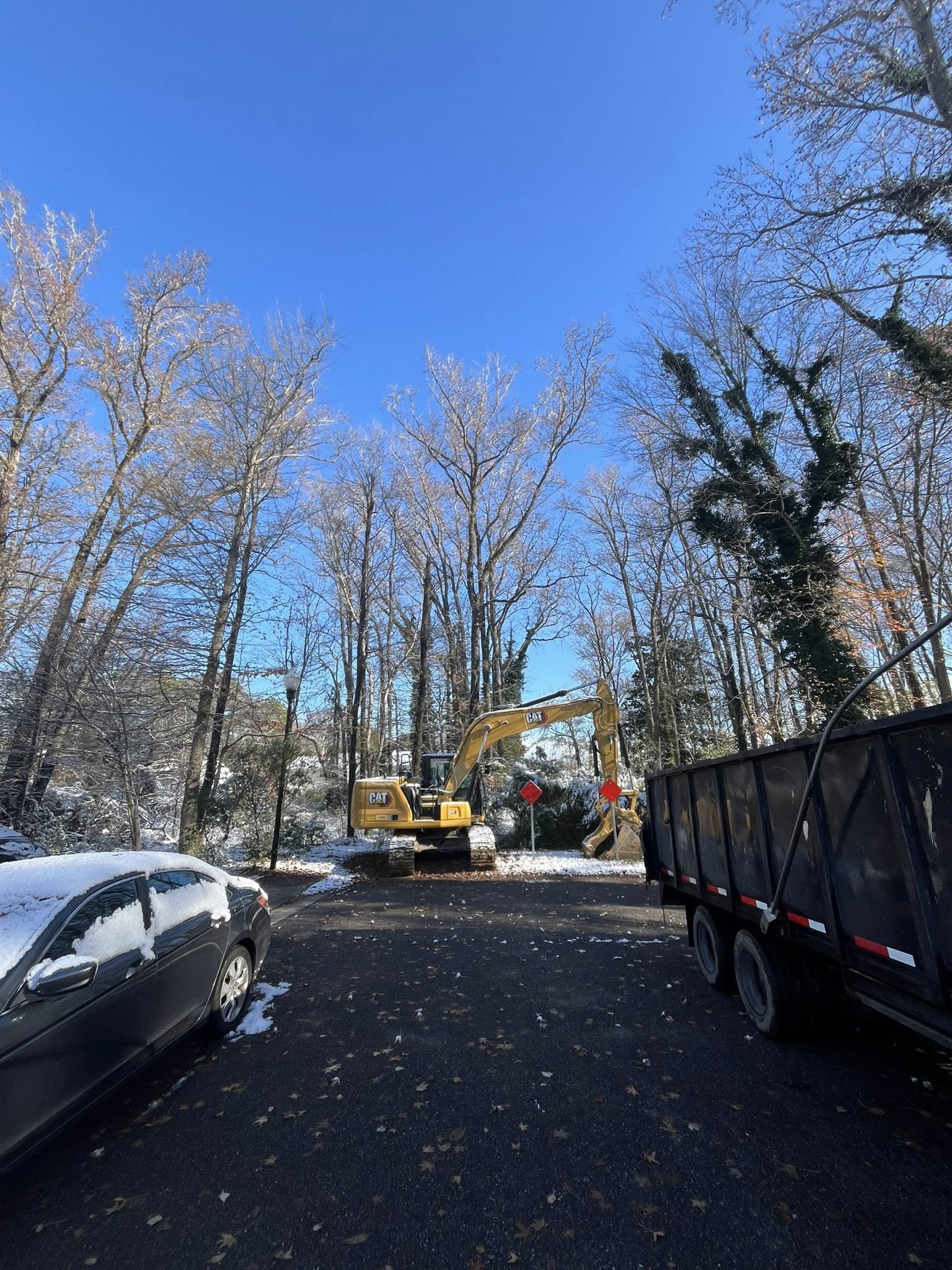
Full licensing for residential and commercial excavation of any scale, backed by annual employee background checks.
We know how to work tight urban and suburban sites without disrupting neighboring properties.
Over 10 years and 100+ completed excavation and earthwork projects across the region.
Site assessment, excavation, grading, and drainage handled in-house by the same crew.
We also serve nearby Peninsula and Middle Peninsula communities including:
– Chesterfield, VA
– Essex County, VA
– Gloucester, VA
– Hopewell, VA
– James City County
– Kilmarnock, VA
– King William, VA
– Lancaster, VA
– New Kent, VA
– Reedville, VA
– Richmond, VA
– West Point, VA
– Williamsburg, VA
– York County
– Yorktown, VA
Pricing depends on lot size, soil conditions, and how much drainage or grading work is required. Tighter urban lots can add labor time due to limited equipment access. We offer free on-site estimates so pricing reflects your actual property.
Most excavation and land disturbance work in Hampton requires a permit through the city, especially where stormwater management is affected. We help confirm what’s needed before starting your project.
Parts of Hampton fall within FEMA flood zones, which can affect required grading elevations and drainage design. We check flood zone status as part of our site assessment and plan the excavation accordingly.
Yes. A lot of our Hampton work is on compact residential and commercial lots. We use appropriately sized equipment and plan material staging carefully to avoid impacting neighboring properties.
Sandy soil drains well but is prone to erosion if graded incorrectly. We build erosion control and proper runoff routing into the grading plan from the start, rather than treating drainage as a separate step.
Most residential projects take 2 to 5 days depending on lot access and soil conditions. Commercial or drainage-intensive projects take longer. We provide a firm timeline after the site walk.