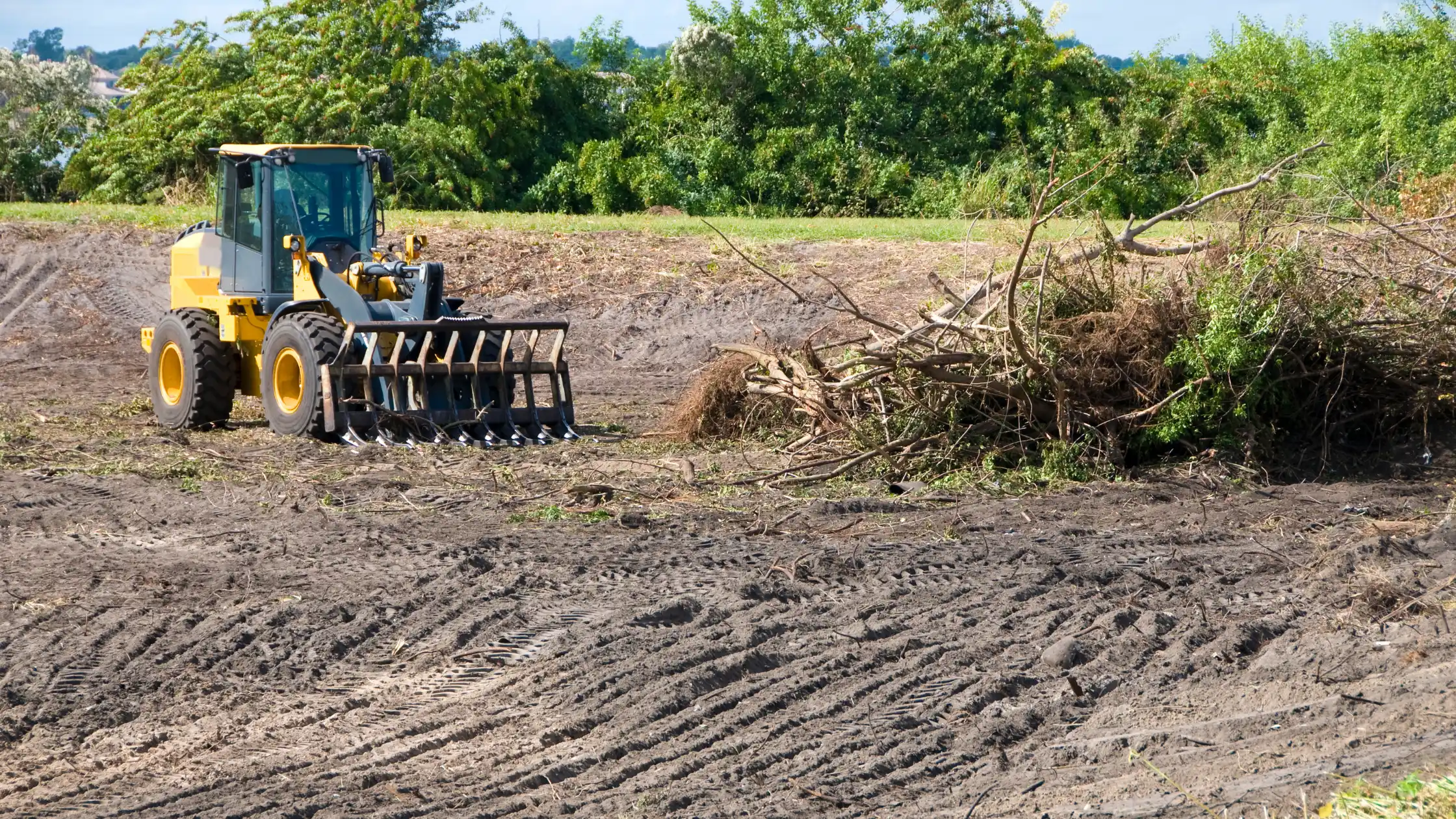
Most Virginia lot clearing projects cost $1,500 to $8,000 per acre in 2026, depending on tree density, soil, access, and debris removal. Light brush on a dry lot in Gloucester sits near the bottom of that range. A wooded, waterfront parcel near the York River sits near the top.
This article explains what drives that spread so you can budget accurately before you call anyone.
Key takeaways
- Light brush clearing starts around $1,500 per acre, while dense hardwood lots can pass $8,000 per acre.
- Tree size and density affect price more than acreage does.
- Stump grinding, hauling, and grading are the most common add-ons that surprise homeowners.
- Wet ground from October through March can raise costs on Peninsula clay soils.
- A licensed Class A contractor protects you from permit, erosion control, and liability problems.
Overview
Lot clearing costs depend on five things: vegetation type, lot size, terrain and soil, disposal method, and permits. This guide breaks down each factor with 2026 Virginia price ranges, compares professional work to DIY, and explains local conditions in Gloucester, Williamsburg, and the surrounding Peninsula that change the final number. M.L. Blake Earthworks holds a Class A Contractor license and prices each lot after a site visit, so you see a real number instead of a guess.
How much does lot clearing cost in Virginia?
Here is the 2026 pricing we see across Eastern and Central Virginia. Our land clearing per acre guide goes deeper on acreage math.
| Lot condition | Typical cost per acre | What you get |
| Light brush and saplings | $1,500 to $3,000 | Brush cutting, bush hogging, light debris handling |
| Mixed brush and small trees | $3,000 to $5,000 | Tree removal under 8 inches, mulching or hauling |
| Dense woods with mature trees | $5,000 to $8,000+ | Full tree removal, stump work, debris disposal |
| Forestry mulching only | $1,800 to $4,500 | Trees ground to mulch on site, no hauling |
These figures cover clearing alone. Grading, fill, and driveway prep add cost, which we cover below.
What drives the price up or down
Tree size and density
A lot with 200 loblolly pines under 10 inches costs far less than one with 40 mature oaks. Large hardwoods need heavier equipment, more labor, and more time. Stump grinding typically adds $100 to $400 per stump depending on diameter.
Disposal method
Hauling debris off site costs more than mulching it in place. Forestry mulching often saves money on lots where wood chips can stay as ground cover. Burning is limited by local rules and weather, so most clients choose mulching or hauling.
Access and terrain
Narrow driveways, soft shoulders, and steep banks slow equipment down. Slow work costs more. Even flat Peninsula lots can be hard to reach if the only access crosses a drainage ditch.
What most Virginia guides miss: soil and the wet season
Gloucester, Mathews, and Middlesex sit on coastal plain soil with heavy clay layers below a thin sandy loam. After a nor’easter or a tropical system, that clay holds water for days. Tracked equipment on saturated ground rips up the lot and leaves ruts that need regrading.
We schedule clearing for dry stretches whenever possible. Late summer and early fall offer firm ground, but hurricane season (June through November) can shut a job down for a week. Winter clearing works well on higher ground near Williamsburg and James City County, but low-lying lots near tidal creeks often need to wait for spring.
If you are clearing a lot with a pond, creek, or marsh edge, expect extra cost. Tidal wetlands and Resource Protection Areas limit what machines can touch, and silt fence and buffer requirements add labor.
Permits and regulations that affect your budget
Clearing more than 10,000 square feet in most Virginia localities triggers an erosion and sediment control plan under Virginia DEQ erosion and sediment control rules. Lots in Chesapeake Bay Preservation Areas face tighter limits near water. A new driveway entrance onto a state road may also need a VDOT land use permit.
Skipping these steps leads to stop work orders and fines that can exceed the cost of the clearing itself. A licensed contractor builds permit work into the bid. You can read why that matters in our guide to the Class A contractor license.
Costs that come after clearing
Clearing is rarely the last step. Most owners need grading, drainage, or a building pad right away. Sitework and grading typically adds $1,000 to $4,000 per acre depending on how much fill or cut the lot needs. Culvert installation, gravel driveways, and utility trenching are priced separately.
Plan for these costs early. A cleared lot with poor drainage can flood after the first heavy rain, especially on flat ground in Hampton and Newport News.
Professional vs. DIY lot clearing
| Factor | Licensed professional | DIY |
| Equipment | Mulchers, excavators, and skid steers on site | Rental at $300 to $900 per day, plus delivery |
| Permits | Handled in the bid | Owner responsible, easy to miss |
| Safety | Trained crews, insured | Falling trees and equipment rollovers are common injuries |
| Liability | Covered by contractor insurance | Owner pays for damaged utilities or neighboring property |
| Timeline | Days | Weekends or weeks |
| Final result | Graded, ready to build | Often needs a second contractor to fix problems |
Most DIY attempts cost more once rental fees, fuel, disposal, and repair work are added. A professional crew also spots buried septic lines, old wells, and utility easements before they turn into expensive mistakes.
Real examples from the Peninsula
A half-acre wooded lot near Gloucester Courthouse with mixed pine and sweetgum usually lands between $2,500 and $4,500 with stump grinding. A one-acre waterfront lot with mature hardwoods and shoreline setbacks can reach $7,000 or more. Our post on waterfront lot clearing in Gloucester explains why those lots cost more.
Further inland, a flat one-acre lot in New Kent with scattered young pines often clears for $3,000 to $4,000. Soil firmness and easy access keep those jobs efficient.
Request a quote from a local contractor
If you want a firm answer on how much does lot clearing cost for your property, ML Blake Earthworks will walk the lot with you and write a clear estimate. Our office at 5181 Fletcher Rd, Gloucester, VA 23061 serves homeowners and builders across the Peninsula and Middle Peninsula, and you can reach us at (804) 854-2176 or at www.mlbearthworks.com. Call today to schedule a site visit and get your price in writing.
Frequently asked questions about how much does lot clearing cost
How much does it cost to clear a half-acre lot in Virginia?
A half-acre usually costs $750 to $4,000 depending on vegetation. Light brush runs near the low end. Wooded lots with stump grinding and debris hauling land at the high end. Small lots can carry minimum charges because crews still need to move equipment and set up erosion controls.
Is forestry mulching cheaper than traditional land clearing?
Often yes. Mulching grinds trees in place, so you skip hauling and disposal fees. Typical Virginia pricing runs $1,800 to $4,500 per acre. It works best on lots where wood chips can stay as ground cover. Lots needing a bare building pad usually need full removal.
Do I need a permit to clear land in Gloucester County?
Usually yes for larger projects. Clearing over 10,000 square feet generally triggers erosion and sediment control requirements, and Chesapeake Bay Preservation Act rules apply near tidal water. Requirements vary by locality, so your contractor should confirm with the county before work begins.
Does stump removal cost extra?
Yes, in most bids. Stump grinding typically costs $100 to $400 per stump based on diameter and root spread. Some contractors bundle grinding into per-acre pricing on smaller trees. Always ask whether your quote includes stumps, since this is the most common billing surprise.
What time of year is best for clearing land in Virginia?
Late summer through early winter offers the firmest ground on most Peninsula lots, though tropical storms can cause delays through November. Low-lying properties near creeks and marshes clear best in dry periods. Wet spring weather often turns clay soil soft and slows heavy equipment.
Can I get a lot cleared and graded in one project?
Yes, and it often saves money. One contractor can clear, grind stumps, rough grade, and set drainage in a single mobilization. That avoids paying for equipment delivery twice and prevents damage to a cleared lot from a second crew arriving later.
Conclusion
Lot clearing costs vary widely in Virginia, but the factors are predictable: vegetation, access, soil, disposal, and permits. A written estimate from a licensed contractor beats any online average, because only a site visit shows what your lot needs. Hiring a professional also protects you from stop work orders, damaged utilities, and regrading costs that DIY projects often create.
Start by walking your lot and noting tree size, water features, and how equipment will reach the site. Then explore our land clearing services or see local options like land clearing in Williamsburg. A clear scope and an honest quote put you on solid footing for whatever you plan to build next.