
how much does sitework cost

A cleared lot in Gloucester doesn’t mean a ready lot

A property owner in Gloucester County recently cleared a wooded lot near the York River, expecting the excavator to show up the next week and start grading. Instead, the site sat for another month while soil tests and drainage plans got sorted out. That gap between “the trees are gone” and “the ground is ready to build on” is where sitework pricing gets decided, and it’s the part most cost guides skip entirely. This article breaks down what actually drives sitework cost across Central and Eastern Virginia, from soil type to drainage design to how far the crew has to haul dirt off site.

Key takeaways

  • Sitework cost in Virginia is driven mainly by soil conditions, grading complexity, drainage requirements, and access to the site
  • Flat coastal plain terrain in areas like Gloucester and James City County can still require extensive drainage work because water has nowhere to run off naturally
  • Clay-heavy soil common on the Peninsula often needs amendment or over-excavation, which adds cost that a flat per-acre estimate won’t capture
  • Permitting timelines, especially near tidal wetlands, can affect scheduling more than they affect price
  • A written scope with soil and drainage details built in is the only way to get an accurate number, not a generic estimate

Overview

Sitework covers the excavation, grading, drainage, and utility prep work that turns raw or cleared land into a buildable site. Cost depends on a combination of factors specific to each property: soil composition, existing grade, drainage design, utility runs, and how easily equipment can access the site. There is no single flat rate that applies across Virginia, because a lot in flood-prone lowland Gloucester and a lot on higher ground in Chesterfield can require completely different amounts of work even at the same acreage. ML Blake Earthworks evaluates each site individually, factoring in soil tests, drainage needs, and regional permitting requirements before providing a scope-based quote.

What actually goes into a sitework quote

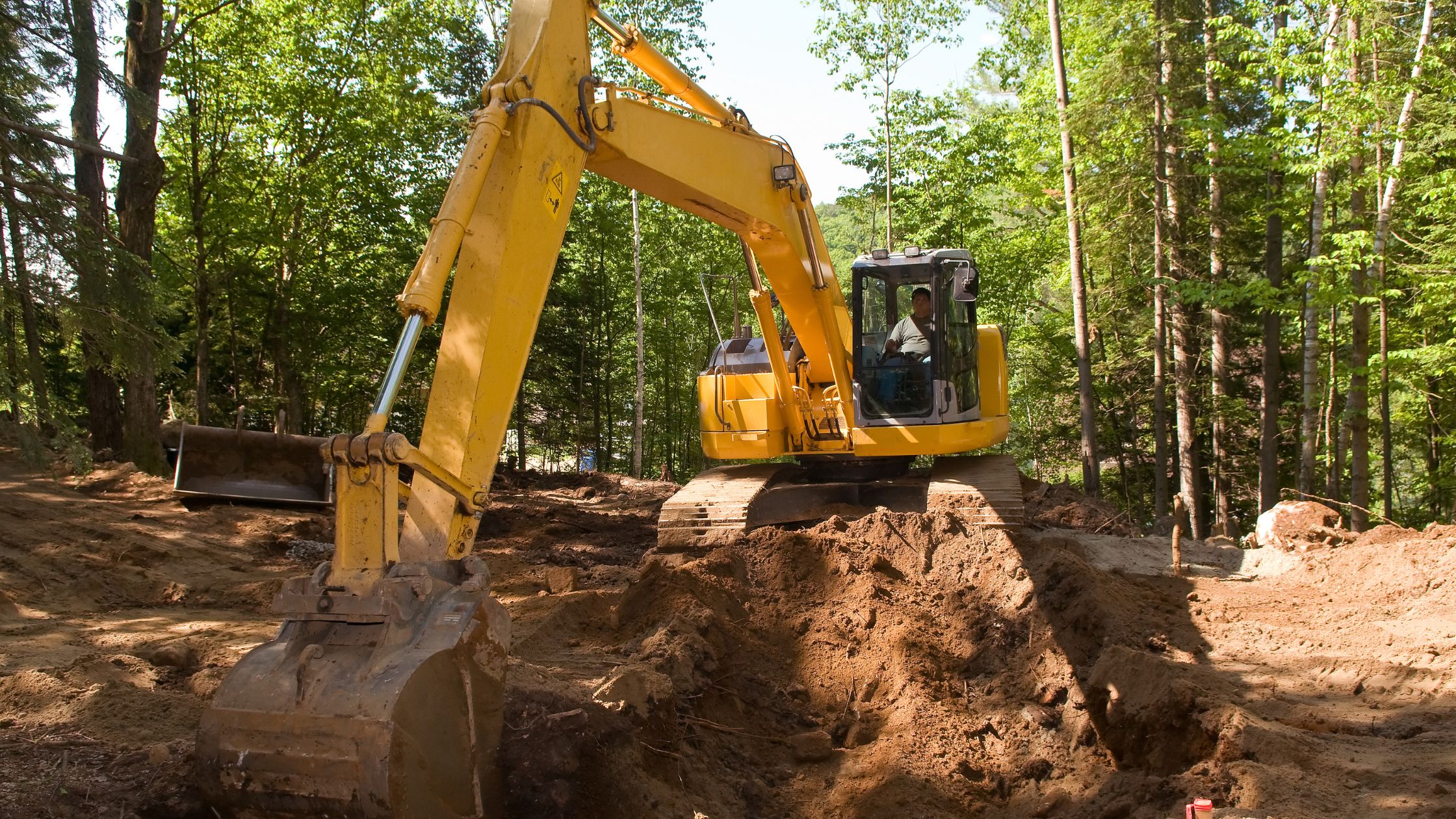
Sitework is not one task. It typically includes rough grading, cut-and-fill work, drainage installation, utility trenching, and compaction testing before a foundation or driveway ever goes in. Each of those line items has its own cost driver, and a contractor pricing the job has to account for all of them together rather than quoting off acreage alone. The biggest swing factor is usually how much dirt has to move. A lot that’s already close to the target elevation needs far less cut-and-fill work than one that needs several feet of grade change. Hauling excess soil off site, or bringing fill in when there isn’t enough on site, adds trucking and material costs that vary by how far the nearest disposal or borrow site is.

Soil conditions on the Peninsula

Much of Gloucester County and the surrounding Middle Peninsula sits on a mix of heavy clay and sandy loam. Clay-heavy soil drains poorly and compacts differently than sandy soil, which means it often needs amendment, additional compaction passes, or a redesigned drainage plan to meet code. A site with unstable or poorly draining soil can add real cost to a project that looked simple on paper, and that’s a detail a generic online cost calculator has no way to account for.

Drainage in flat, low-lying terrain

The flat to gently rolling coastal plain terrain around Gloucester, Mathews, and Poquoson creates a specific drainage problem: water doesn’t run off the way it would on a sloped inland site. Tidal creeks, wetlands, and high water tables mean drainage systems often need more grading precision and sometimes engineered swales or French drains to keep water away from a foundation. Skipping proper drainage design to save money upfront is one of the most common reasons Virginia homeowners end up with standing water or foundation issues within a year or two.

Access and site conditions

A lot with a long, narrow, or wooded driveway costs more to work than one with open road frontage, because equipment mobilization takes longer and sometimes requires smaller machinery. Waterfront lots near the York or Piankatank rivers frequently fall under additional review, since work close to tidal areas can trigger Virginia DEQ or wetland permitting requirements that affect both timeline and scope.

Why sitework cost ranges vary so much between quotes

Two homeowners in the same county can get sitework quotes that look wildly different, and it’s rarely because one contractor is overcharging. Differences usually come down to how much excavation and haul-off the site actually needs, whether utility trenching is included, and how much drainage engineering the property requires. A quote that only accounts for surface grading will always look cheaper than one that includes proper drainage and compaction, but the cheaper number often means the work isn’t done to a standard that holds up. We don’t publish a flat per-acre or per-square-foot rate here, because doing so on a topic this site-dependent would give property owners a number that doesn’t hold up once a contractor actually walks the lot. The more useful approach is understanding which factors move the price, so a quote makes sense when it arrives.

Professional sitework vs. DIY grading

Renting a skid steer for a weekend and grading a small area yourself might work for a garden bed or a shed pad. It does not work for anything tied to a foundation, driveway, or drainage system. Sitework has to meet compaction standards and grading tolerances that a homeowner without survey equipment and compaction testing has no reliable way to verify. Improper grading is one of the most expensive mistakes to fix after the fact, because correcting it often means undoing finished work like a driveway or slab to get underneath it. A licensed contractor working under Class A licensing carries the insurance and inspection accountability that DIY grading simply doesn’t, which matters if drainage problems show up after a heavy rain event during Virginia’s tropical storm season.

Timing sitework around Virginia’s climate

Virginia’s humid subtropical climate means sitework scheduling has to account for wet ground, not just calendar dates. Late spring through early fall brings heavier rainfall and the tropical storm season that runs from June through November, both of which can delay grading and compaction on clay-heavy sites that don’t drain quickly. Many Peninsula contractors, including ML Blake, try to schedule heavier excavation and grading work during drier stretches when soil compacts more reliably, since compacting wet clay rarely holds up to code. Winters in this region are mild, and ground rarely freezes hard enough to halt work, which gives property owners more scheduling flexibility than colder parts of the state. That said, a stretch of heavy winter rain on flat, low-lying ground near Gloucester or West Point can still leave a site too saturated to grade properly for several days.

What a written sitework scope should include

A sitework quote is only as accurate as the scope behind it. Before signing off on a number, a property owner should expect the contractor to specify grading limits, drainage design, whether utility trenching is included, and how excess soil or fill will be handled. If a quote doesn’t mention soil conditions or drainage at all, that’s usually a sign it was built off a rough estimate rather than an actual site walk. For larger projects, this also connects to broader site preparation work, which can include everything from initial land clearing through final grading. Understanding how these pieces fit together helps property owners budget for the full process instead of just the sitework line item. If a property still needs trees or brush cleared before grading can start, that work is usually priced and scheduled separately. Homeowners near Newport News or Williamsburg dealing with a wooded lot often benefit from getting a land clearing estimate first, since the condition of the cleared ground affects the sitework scope that follows. Property owners planning concrete work on top of finished sitework, like a driveway or garage pad, should also confirm the compaction standard the sitework meets, since concrete services depend on a properly prepared base to avoid cracking or settling later. If your project involves work near a tidal creek or the York River shoreline, sitework and shoreline restoration planning often need to happen together, since grading near the water table can affect both projects. Anyone weighing whether to demolish an existing structure before starting sitework should also look at what demolition services actually involve, since debris removal and site cleanup are usually priced and scheduled ahead of grading. Getting an accurate sitework quote in Virginia starts with a real conversation about your property, and that’s exactly the kind of walkthrough ML Blake Earthworks provides before putting a number on paper; if you’re weighing how much does sitework cost for your Gloucester or Middle Peninsula property, reach out to ML Blake Earthworks at 5181 Fletcher Rd, Gloucester, VA 23061, or call (804) 854-2176, and you’ll get a scope built around your actual site instead of a generic per-acre guess.

Frequently Asked Questions About how much does sitework cost

Does sitework cost more near the water in Gloucester County?

Answer: Often yes. Lots near tidal creeks or the York River can require additional drainage engineering and sometimes DEQ or wetland permitting review, both of which add time and cost beyond standard grading work on higher, drier ground.

How long does sitework typically take on a residential lot?

Answer: A straightforward residential lot with good access and stable soil can take a few days to two weeks. Sites with drainage challenges, poor soil, or permitting requirements often take several weeks longer.

Is sitework included in a land clearing quote?

Answer: No. Land clearing removes trees, brush, and stumps, while sitework covers grading, drainage, and utility prep after clearing is done. Most contractors price and schedule them as separate phases.

Why do two sitework quotes for the same lot come back so different?

Answer: The gap usually comes from scope, not markup. One quote may only cover surface grading while another includes drainage design, compaction testing, and utility trenching, all of which add real cost but also real durability to the finished site.

Does clay soil really change sitework pricing that much?

Answer: Yes. Clay-heavy soil common on the Peninsula compacts differently than sandy soil and often needs amendment or extra compaction passes to meet code, which adds labor and material cost that sandy sites don’t require.

Can sitework be done in the winter in Virginia?

Answer: Usually yes, since winters here are mild and the ground rarely freezes solid. Heavy winter rain on flat, low-lying terrain can still saturate the ground enough to delay grading for a few days at a time.

What permits are typically needed for sitework near wetlands?

Answer: Projects near tidal wetlands or waterways may need Virginia DEQ review or a wetlands permit before grading begins. A licensed contractor familiar with local requirements can flag this early so it doesn’t stall the project.

Conclusion

Sitework cost in Virginia comes down to what your specific lot actually needs, not a number pulled from a generic calculator. Soil type, drainage design, access, and how much dirt has to move all factor into a scope-based quote that holds up once work begins. Skipping proper grading or drainage to save money upfront tends to cost more later, especially on the flat, clay-heavy terrain common across the Peninsula. If you’re ready to get a quote built around your actual property instead of a rough estimate, a real site walkthrough is the place to start.