
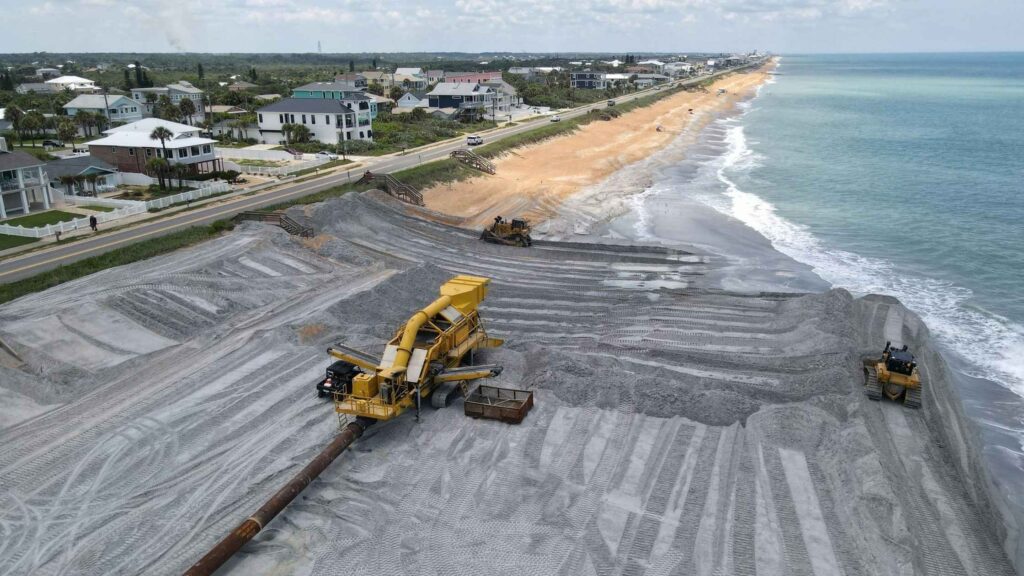
Virginia’s waterfront properties face an escalating battle against nature’s forces. With historic erosion rates reaching up to 30 feet per year in some locations and approximately one-third of Virginia Beach’s coastline experiencing moderate to severe erosion at rates of 7.3 feet annually, property owners need professional intervention more than ever.
This comprehensive guide explores everything you need to know about professional shoreline restoration services in Virginia, from regulatory requirements to cutting-edge solutions that protect your valuable waterfront investment.
Key Takeaways
- Regulatory Shift: As of July 1, 2020, Virginia requires living shorelines as the preferred method unless proven unsuitable
- Financial Impact: Virginia Beach’s $20.2 million investment in restoration since 2002 has prevented over $1 billion in storm-related damages
- Professional Expertise Required: Quick fixes without proper technical expertise often fail and can accelerate erosion on adjacent properties
- Multiple Solutions Available: Modern restoration incorporates living shorelines, riprap revetments, bulkheads, and hybrid approaches
- Financial Assistance: Virginia offers up to 80% reimbursement with maximum payments of $30,000 for qualifying projects
Overview
Professional shoreline restoration services in Virginia have evolved significantly following new state mandates prioritizing environmental sustainability. The field encompasses various techniques from traditional hardened structures to innovative living shoreline approaches that work with natural processes rather than against them. These services address critical issues including property protection, environmental compliance, and long-term coastal resilience. With Virginia’s challenging coastal environment featuring diverse water bodies from the Chesapeake Bay to Atlantic coastlines, professional restoration requires specialized knowledge of local conditions, regulations, and proven methodologies. Success depends on proper site assessment, appropriate technique selection, and expert implementation by certified professionals who understand both engineering principles and ecological considerations.Understanding Virginia’s Shoreline Challenges
Virginia’s diverse coastal environment presents complex challenges requiring professional intervention. The Commonwealth regularly faces hurricanes and tropical storms, with the Hampton Roads area experiencing direct hits from Category Three storms. These natural forces, combined with rising sea levels and human development, create accelerated erosion conditions. Primary Erosion Factors:- Storm Activity: Severe weather events generate powerful waves that can remove entire beaches and undermine structures
- Sea Level Rise: NOAA projections indicate sea levels will rise 2.5 feet by 2050 and 6.7 feet by 2100 at Norfolk’s Sewell’s Point
- Fetch Distance: Greater fetch distances create larger potential waves during storms, particularly affecting Chesapeake Bay shorelines
- Soil Composition: Different soil types respond differently to erosion forces, with some areas losing land more rapidly than others
The Regulatory Landscape: Living Shorelines First
Virginia’s approach to shoreline management underwent a revolutionary change with Senate Bill 776. This legislation directs the Virginia Marine Resources Commission to approve only living shoreline approaches unless the best available science shows they are unsuitable. This represents a fundamental shift from traditional hardened structures to nature-based solutions. What This Means for Property Owners:- First Option: Living shorelines must be considered before any hardened alternatives
- Professional Assessment Required: Projects must be specifically designed for the shoreline segment and function under future sea level rise conditions
- Streamlined Permitting: Virginia offers general permits for qualifying living shoreline projects to encourage adoption
- Financial Incentives: Approved living shoreline projects qualify for full exemption from local taxation
Professional Shoreline Restoration Techniques
Modern shoreline restoration services encompass multiple approaches, each suited to specific site conditions and property requirements.Living Shorelines: The New Standard
Living shorelines combine native wetland plants, grasses, shrubs, and trees with carefully placed bioengineering materials like coconut-fiber rolls and oyster reefs. These systems provide multiple benefits:- Erosion Control: Natural vegetation and structures absorb wave energy
- Environmental Benefits: Habitat creation and water quality improvement through nutrient filtering
- Adaptability: Living shorelines can adapt to changing water levels and increased storm activity resulting from climate change
- Long-term Stability: Self-maintaining systems that improve over time
Traditional Hardened Structures
While living shorelines are preferred, certain conditions still require traditional approaches: Riprap Revetments: Rock revetments are the preferred alternative when hardened structures are necessary. These systems use strategically placed stone to absorb wave energy and protect shorelines from erosion. Bulkheads and Seawalls: Only permitted when no other alternative approach is suitable and must be placed as far landward as possible. These vertical structures provide immediate protection but require careful design to prevent scour and adjacent property impacts.Hybrid Solutions
Professional restoration increasingly employs hybrid approaches combining natural and engineered elements. These solutions maximize the benefits of both systems while addressing site-specific challenges.The Professional Restoration Process
Successful shoreline restoration requires a systematic professional approach:Site Assessment and Analysis
Professional teams conduct comprehensive evaluations, including:- Wave Energy Analysis: Measuring fetch distances and storm exposure
- Soil Composition Testing: Determining erosion susceptibility and foundation requirements
- Environmental Surveys: Identifying sensitive habitats and regulatory constraints
- Property Impact Assessment: Evaluating potential effects on adjacent properties
Design Development
Engineers develop site-specific solutions incorporating:- Regulatory Compliance: Meeting Virginia’s living shoreline preferences and permitting requirements
- Climate Resilience: Designs must withstand projected sea level rise scenarios
- Material Selection: Choosing appropriate plants, stones, and bioengineering materials
- Maintenance Planning: Developing long-term care strategies
Implementation and Installation
Professional installation includes:- Proper Equipment: Using specialized machinery for precise material placement
- Timing Coordination: Scheduling work around environmental windows like sea turtle nesting seasons
- Quality Control: Monitoring installation to meet design specifications
- Environmental Protection: Minimizing impacts during construction
Long-term Maintenance
Professional shoreline restoration services include ongoing support through:- Performance Monitoring: Regular inspections to assess system effectiveness
- Adaptive Management: Making adjustments based on changing conditions
- Storm Damage Assessment: Rapid response following severe weather events
- System Upgrades: Incorporating new technologies and techniques as they become available