What Virginia landowners pay for land clearing in 2026?
If you own a wooded lot in Gloucester County or a brushy parcel near Williamsburg and you’re ready to break ground, one of your first questions is almost certainly: how much is land clearing per acre going to cost me? It’s a fair question, and the honest answer is that it depends on several variables specific to your property and your region.
This guide breaks down realistic 2026 pricing for land clearing in Central and Eastern Virginia, explains the factors that drive costs up or down, and helps you understand why hiring a licensed excavating contractor pays off in the long run.
Key takeaways
- Land clearing costs in Virginia typically range from $1,500 to $6,500 per acre depending on vegetation density, terrain, and access.
- Heavy clay soils and tidal wetlands common to the Virginia Peninsula add complexity and cost to clearing projects.
- Lightly wooded or brushy land costs significantly less to clear than mature timber with large stumps.
- Forestry mulching is often a cost-effective method for overgrown residential lots and rural properties.
- Virginia DEQ and local wetland regulations may require permits before clearing near waterways or sensitive areas.
- Working with a licensed Class A contractor protects you from fines, delays, and costly rework.
What this guide covers
Clearing raw land is rarely straightforward. Between the vegetation type, soil conditions, drainage challenges, and local permitting requirements, even neighboring properties can carry very different price tags. Below, we walk through the primary cost factors, the methods contractors use, what you should realistically budget, and why timing and professional expertise matter on Virginia projects. ML Blake Earthworks works throughout the region and can give you a site-specific estimate based on your actual conditions.
How much is land clearing per acre in Virginia?
The short answer: most Virginia landowners pay between $1,500 and $6,500 per acre for professional land clearing. That wide range reflects real differences in what contractors encounter on different properties. A field of overgrown brush is a completely different job from a half-acre of mature hardwoods with deep root systems.
Here’s a practical breakdown by land type:
- Lightly brushy or weedy land: $500 to $1,500 per acre
- Mixed shrubs and small trees (under 6 inches diameter): $1,500 to $3,000 per acre
- Moderately wooded with mid-size trees: $3,000 to $5,000 per acre
- Heavily forested with mature hardwoods and stumps: $5,000 to $6,500+ per acre
These figures are general starting points. Your final cost depends on the specific factors discussed below.
Factors that affect land clearing costs
Vegetation density and tree size
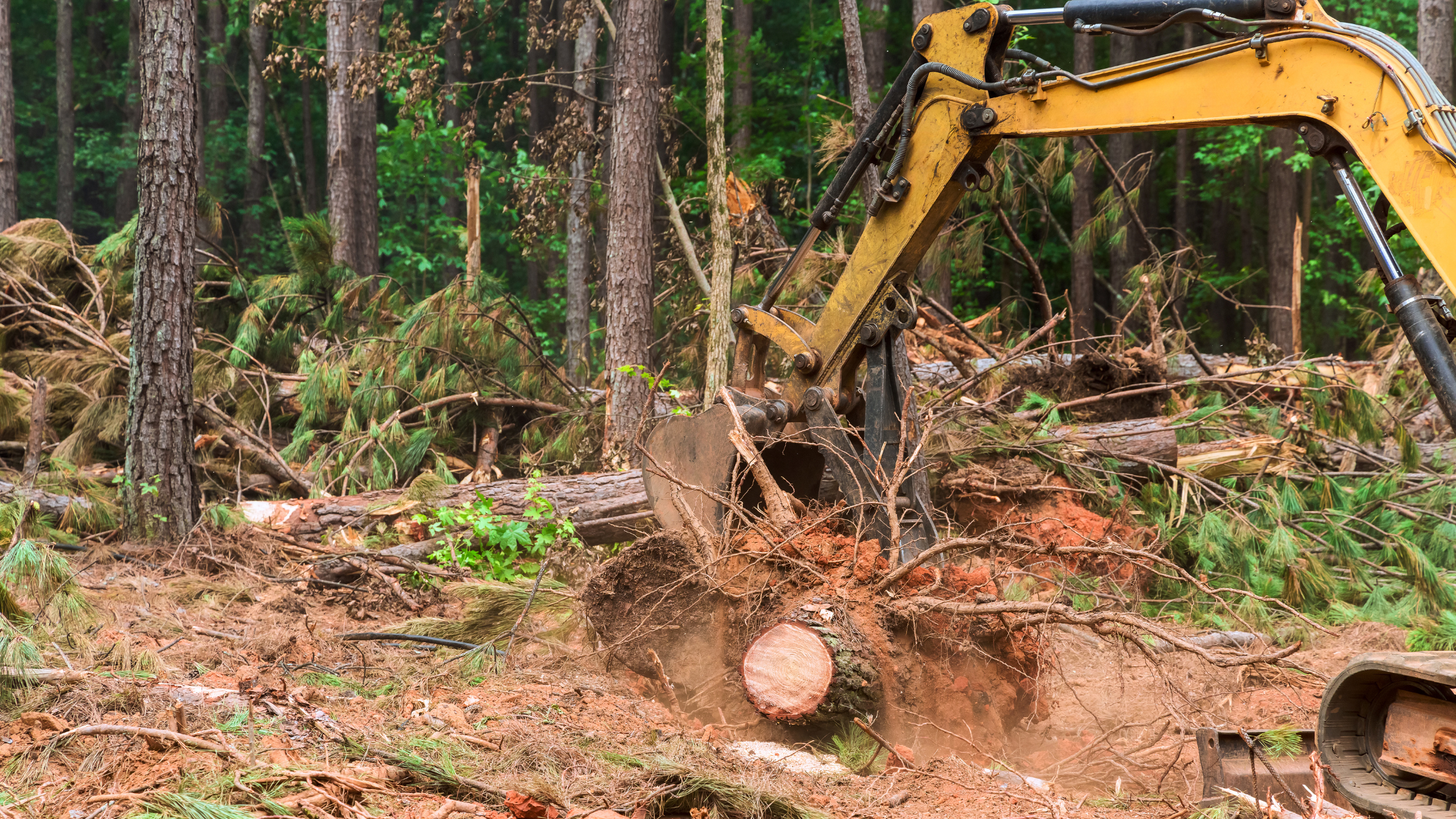
The single biggest cost driver is what’s growing on your land and how large it is. Removing a few saplings and clearing briars is quick work. Taking down mature oaks, removing root balls, and grinding large stumps takes significantly more time, equipment, and labor. In the Gloucester and York County areas, where forested lots often contain pine, oak, and sweetgum, clearing costs reflect the density and size of those trees.
Soil type and drainage conditions
Coastal Virginia’s heavy clay soils hold water and can become very soft after rain. Equipment can bog down, and dry working windows close fast during the wet season. Sandy loam soils found in parts of the Northern Neck drain better and tend to support faster work. If your property has standing water, ditches, or sits near a tidal creek, clearing may require additional grading or drainage work as part of the overall scope.
Acreage and accessibility
Larger parcels typically cost less per acre because equipment mobilization is spread over more ground. But access matters just as much as size. A remote or narrow-entry lot can increase the cost per acre because bringing in the right equipment takes more time. Properties with long private roads or tight approaches add to the baseline price.
Debris handling and disposal
What happens to the cleared material affects your final bill. Some contractors chip and haul debris off-site, which adds cost. Others use forestry mulching, where a tracked machine grinds vegetation directly into fine mulch that stays on-site. This method is often more affordable for large lots and has the added benefit of improving soil health. The mulch layer also helps control erosion, which matters on sloped terrain or properties near waterways.
Stump removal
Cutting down trees is one cost. Removing or grinding the stumps is another. Stump grinding typically adds $75 to $300 per stump, depending on diameter. For heavily wooded lots with dozens of stumps, this can add thousands of dollars to the total clearing cost. Discuss upfront whether your quote includes stump work or treats it as a separate line item.
Clearing methods and what they cost
Forestry mulching
Forestry mulching uses a specialized tracked machine with a drum-style cutting head to grind trees, brush, and stumps directly on-site. This is one of the most popular methods in the region because it’s fast, leaves no burning or hauling, and suits Virginia’s clay soils well. Expect to pay $150 to $400 per hour for forestry mulching equipment, which often works out to $1,500 to $3,500 per acre depending on density. Learn more about ML Blake Earthworks’ land clearing services and the full range of site preparation options available.
Traditional clearing and grubbing
This approach involves cutting trees, chipping or hauling brush, and using an excavator to pull stumps. It’s more thorough and better suited when you need the land completely clean for construction. It’s also more expensive, running $3,000 to $6,500 per acre for heavily wooded sites. For construction projects in James City County or New Kent, where builders need a fully graded, cleared pad, this method is often the right choice.
Bush hogging
For overgrown fields, pastures, or lightly wooded areas, bush hogging is the most affordable option. A tractor-mounted rotary cutter knocks down tall weeds, briars, and small saplings. This runs $50 to $200 per acre and works well for routine maintenance or preparing lightly vegetated land. It doesn’t handle trees or stumps, so it’s limited to specific site conditions.
Virginia regulations and permits you need to know
Land clearing near waterways, wetlands, or tidal areas in Virginia is regulated by the Virginia Department of Environmental Quality (Virginia DEQ) and may require a permit before any work begins. The Chesapeake Bay Preservation Act also applies to many properties in the Tidewater region, including those in Gloucester, York County, and the Northern Neck.
Clearing within 100 feet of a water body or wetland without proper permits can result in costly fines and mandatory restoration work. A licensed contractor familiar with local regulations will identify these issues before the first machine rolls onto your property. Shoreline restoration services may also be necessary on properties where clearing has left exposed soil near the water’s edge.
The professional vs. DIY question
It’s possible to rent equipment and attempt to clear a small lot yourself. But the cost savings rarely hold up when you factor in equipment rental ($400 to $800 per day for a skid steer or small excavator), fuel, blade wear, and disposal fees. Add the learning curve of operating heavy equipment safely in variable terrain, and the math changes quickly.
More importantly, DIY clearing often misses issues that experienced operators catch: buried debris, unmarked utilities, marginal soil conditions, and proximity to wetlands. A single mistake near a protected waterway in Virginia can trigger regulatory penalties that far exceed what you would have spent on professional clearing. For anything larger than a fraction of an acre, licensed professionals deliver better results at a comparable or lower true cost.
Best time of year to clear land in Virginia
Virginia’s humid subtropical climate creates real seasonal windows for land clearing. Late fall through early spring (October through March) is often the best time to clear wooded lots. The ground is firmer when temperatures drop, there’s no leaf cover to obstruct sightlines, and erosion risk is lower when vegetation is dormant. Clearing in summer is possible but expect softer ground after heavy rain, and tropical storm season (June through November) can interrupt scheduling.
Spring clearing is productive when the ground has dried after winter, but mid-spring to early summer can be wet and difficult in clay-heavy areas. If your project is time-sensitive, discuss timing with your contractor early so they can plan around weather patterns specific to your area.
What’s included in a professional clearing quote?
A good contractor quote should specify the clearing area in acres, the method being used (mulching, traditional, or a combination), stump handling, debris disposal, any grading included, and permit coordination if needed. Ask whether the quote includes mobilization fees and site cleanup. If the project connects to sitework services like grading, drainage, or utility layout, confirm whether those are bundled or separate.
Getting at least two or three quotes from licensed contractors is reasonable for larger projects. However, be cautious about bids that are dramatically lower than others without clear explanation. Low bids often omit stump removal, debris disposal, or proper permitting, which shows up as add-ons later.
When you’re ready to move forward with your land clearing project, ML Blake Earthworks is a Class A licensed contractor serving property owners throughout Central and Eastern Virginia. Located at 5181 Fletcher Rd, Gloucester, VA 23061, the team brings hands-on experience with the clay soils, waterfront properties, and regulatory environment unique to this region. Call (804) 854-2176 to discuss your site and get an accurate estimate for how much is land clearing per acre on your specific property. You can also visit https://mlbearthworks.com/ to learn more about available services.
Frequently asked questions about how much is land clearing per acre
Q: How much is land clearing per acre for a wooded lot near Williamsburg, VA? A: For a moderately to heavily wooded lot near Williamsburg, expect to pay between $3,000 and $6,000 per acre. Mature hardwoods, clay soil conditions, and stump removal all push costs toward the higher end. Lightly wooded or brushy lots can fall in the $1,500 to $2,500 range.
Q: Does land clearing cost include stump removal? A: Not always. Some quotes include stump grinding and some treat it as a separate line item. Always clarify this upfront. Stump grinding typically adds $75 to $300 per stump, and on a heavily forested lot, that can significantly change the total project cost.
Q: Do I need a permit to clear land in Gloucester County? A: It depends on your property’s proximity to waterways or wetlands. Properties near tidal creeks, the York River, or other protected water bodies may require Virginia DEQ review or a permit under the Chesapeake Bay Preservation Act. A licensed contractor can assess this before work begins.
Q: What is forestry mulching, and is it cheaper than traditional clearing? A: Forestry mulching uses a tracked machine to grind trees and brush directly into mulch on-site, eliminating hauling costs. For most residential and rural lots in Virginia, it is more affordable than traditional clear-and-haul methods and leaves the soil in better condition.
Q: How long does it take to clear one acre of wooded land? A: A single acre of moderately wooded land typically takes one to two full days with the right equipment. Heavily forested acreage or sites with difficult access can take longer. Stump grinding adds time on top of initial clearing.
Q: Will land clearing damage my soil or increase erosion? A: Exposed soil after clearing is vulnerable to erosion, especially in flat or sloped terrain near water. A professional contractor will recommend erosion control measures like silt fencing, seeding, or mulch application. On waterfront properties, shoreline restoration services may be needed to protect the bank.
Q: Can I get land clearing and grading done at the same time? A: Yes, and combining services often reduces your overall cost. Many projects pair land clearing with grading, drainage corrections, or utility installation as part of a complete site preparation package. Discuss the full scope of your project when getting quotes.
Q: Does land clearing cost change based on what I plan to build? A: The intended use can influence the clearing method and thoroughness required. A home site needs full stump removal and grading. A wildlife pond or pasture may only need selective clearing. Communicating your plans to your contractor helps them match the clearing scope to your actual needs.
Conclusion
Land clearing is one of those investments where cutting corners costs you more in the long run. Between Virginia’s regulatory requirements, the region’s clay-heavy soils, and the complexity of wooded waterfront properties, this is work that rewards experience and proper equipment. Whether you’re developing a home site in York County, opening up a rural parcel in King William, or preparing land for a pond or outbuilding, a realistic budget and a licensed contractor will get you there without surprises. Take time to get site-specific quotes, ask detailed questions about what’s included, and start your project on the right foundation.